Skip to main content Skip to main navigation menu Skip to site footer
logo
  • Login
  • Register
E-ISSN: 2146-1767
  • Home
  • Current Issue
  • Archives
  • For Authors
    • Author Guidelines
    • Online Submission
    • Reference Style
    • Call for Papers
    • Language Editing Service
  • For Reviewers
    • Reviewer Guidelines
    • Become a Reviewer
    • Reviewer Resources
  • Ethics & Policies
    • Artificial Intelligence (AI) Policy
    • Authorship and Contributorship
    • Conflicts of Interest
    • Copyright and Permission
    • Corrections and Retractions
    • Crossmark Policy
    • Editorial Policy
    • Human and Animal Rights
    • Informed Consent Policy
    • Journal Management
    • Open Access Statement
    • Research Ethics Policy
    • Publication Ethics Policy
  • Journal Info
    • About
    • Abstracting & Indexing
    • Peer Review Process
    • Publication Fee
    • Society Information
    • Useful Links
    • Contact
  1. Home /
  2. Search

Search

Advanced filters
Published After
Published Before

Search Results

##search.searchResults.foundPlural##
  • Comparison of the accuracy of three different electronic apex locators used in root canals enlarged in different apical diameters

    Aim: This study aimed to evaluate the accuracy of three apex locators in enlarged teeth with different apical diameters using files that are compatible and incompatible with the apical diameters. Methodology: Sixty lower premolars were used in this study. The actual canal length was determined with a stereo microscope, and the teeth were divided into three different groups (G25, G40 and G50). The teeth in G25, G40 and G50 were enlarged in actual canal length with apical diameters of 0.25, 0.40 and 0.50 mm using hand files and Reciproc R25, R40, and R50, respectively. In the electronic measurements, a #15 hand file was used in each group, and #25, #40 and #50 hand files that were compatible with the apical diameters of the teeth in the groups were used. An alginate model was created with enlarged teeth. The electronic working length was determined for each tooth using Root ZX Mini, Raypex 6, and Propex Pixi electronic apex locators (EALs). Results: Electronic measurement results that were shorter by 0.50 mm or longer by 0.05 mm than the actual length were considered unsuccessful; otherwise, they were deemed successful. Analysis of variance was used to evaluate the accuracy of the EALs with different files in the same apical diameter. For the different apical diameters, the chi-square exact test was used to evaluate the accuracy effect of using files that were incompatible with each apical diameter. The level of significance was p > 0.05. In all the groups, the measured lengths were closer to the actual canal length with the use of #25, #40 and #50 hand files that were compatible with the apical diameters. However, there was no significant difference between the measurements with the #15 hand file (p > 0.05). According to the electronic measurement results made with the #15 hand file in teeth with 0.25, 0.40 and 0.50 apical diameters, the use of a file that was incompatible with the apical diameter did not have a significant effect on accuracy (p > 0.05). Conclusion: The use of a file that is compatible with the apical diameter of the tooth in the determination of the working length with measurement of EALs close to the actual canal length. The accuracy of EALs is not affected by the file size in electronic measurements with file sizes smaller than the apical diameter in teeth with apical diameters up to 0.50 mm.   How to cite this article: Öz H, Adıgüzel Ö, Kaya S. Comparison of the accuracy of three different electronic apex locators used in root canals enlarged in different apical diameters. Int Dent Res 2021;11(Suppl.1):12-8. https://doi.org/10.5577/intdentres.2021.vol11.suppl1.3   Linguistic Revision:  The English in this manuscript has been checked by at least two professional editors, both native speakers of English.  
    electronic apex locator, apical constriction, apical diameter
    Hasan Öz, Özkan Adıgüzel, Sadullah Kaya
    30.09.2021
    12-18
    Abstract Views: 2187 Download: 678 DOI 10.5577/intdentres.2021.vol11.suppl1.3
  • Comparative evaluation of the responses from ChatGPT-5, Gemini 2.5 Flash, and DeepSeek-V3.1 chatbots to patient inquiries about endodontic treatment in terms of accuracy, understandability, and readability

    Aim: The aim of this study is to compare three large language models (LLMs) (ChatGPT-5, Gemini 2.5 Flash, and DeepSeek-V3.1) in terms of accuracy, understandability, and readability, based on the answers provided to frequently asked endodontic questions. Methodology: Thirty open-ended frequently asked questions were generated using the AlsoAsked and AnswerThePublic websites. Two experienced endodontists scored the accuracy of the responses using a 5-point Likert scale. The understandability of the responses was analyzed using the Patient Education Materials Assessment Tool for Printed Materials (PEMAT-P) tool. Readability was assessed using the Flesch-Kincaid Readability Score (FRES), Flesch-Kincaid Grade Level (FKGL), Gunning Fog Index (GFI), Simple Measure of Gobbledygook (SMOG), and Coleman-Liau Index (CLI). Group comparisons were performed using the ANOVA/Kruskal-Wallis test, followed by post-hoc Dunn-Bonferroni tests. Results: Inter-rater agreement was excellent (accuracy ICC: 0.908–0.917; reliability ICC: 0.992–0.995; all p < 0.001). A significant difference was found between the models in terms of accuracy (p < 0.001): DeepSeek-V3.1 (4.63 ± 0.81) scored the highest and performed significantly better than ChatGPT-5 (3.93 ± 0.79) and Gemini 2.5 Flash (3.67 ± 0.76). No significant difference between ChatGPT-5 and Gemini 2.5 Flash (p > 0.05). The understandability (PEMAT-P) scores were similar (p = 0.683), and all models scored above 70% (ChatGPT-5, 77.46%; Gemini, 76.04%; DeepSeek-V3.1, 77.57%). Differences were found in readability metrics: DeepSeek-V3.1 scored higher than ChatGPT-5 in FRES (p = 0.044); Gemini scored higher than DeepSeek-V3.1 in FKGL (p = 0.001); in GFI, Gemini 2.5 Flash scored higher than both ChatGPT-5 (p = 0.036) and DeepSeek-V3.1 (p < 0.001); in SMOG, Gemini outperformed DeepSeek-V3.1 (p = 0.003); and in CLI, ChatGPT-5 was higher than DeepSeek-V3.1 (p = 0.004). No significant correlation was found between readability and understandability (p > 0.05). Conclusion: DeepSeek-V3.1 outperformed ChatGPT-5 and Gemini 2.5 Flash in terms of accuracy. While all models produced similar scores above the PEMAT-P understandability threshold (70%), there were significant differences in readability metrics; furthermore, no model consistently reached the recommended 6 th –8 th grade level.
    Artificial intelligence, large language models (LLMs), ChatGPT, Gemini, DeepSeek, patient questions in endodontics, accuracy, understandability, PEMAT-P, readability
    Makbule Taşyürek, Özkan Adıgüzel, Mustafa Gündoğar, Myroslav Goncharuk-Khomyn, Hatice Ortaç
    31.12.2025
    123-135
    Abstract Views: 7864 Download: 2378 DOI 10.5577/intdentres.662
  • Evaluating the accuracy of intraoral scanners used in single-unit implant prosthesis construction

    Aim: This study aims to evaluate and compare the scanning accuracy of various intraoral scanners when taking digital impressions of single-implant-supported prostheses. Methodology: A partially edentulous model with a single implant was produced, and a scan body was fixed on the model. The control model was created by scanning the model using Ineos X5 (CM). The model was also scanned (n = 3) using three different intraoral scanners (IOS) [(Helios (H), TRIOS 3 (T3), Medit (M)]. GOM Inspect software was used for comparison. The data were analyzed with a Shapiro–Wilk test, resulting in a nonnormal distribution, and Kruskal–Wallis test was employed for intergroup parameter comparisons. Results: There were significant differences in the devices’ accuracy values ( p < 0.05). Accuracy M (19.1 μm), T3 (25.3 μm), H (33.9 μm) and sensitivity values (M (10 μm), T3 (19.05 μm), H (25 μm)) are similarly listed from high to low as M, T3, and H. Conclusion: IOS can be used to create digital impressions for single-unit implant crowns. Clinicians should be cautious and selective when choosing IOS for more successful and accurate impressions. More comprehensive and clinical studies using different brands are needed on this subject.   How to cite this article: Güzelce Sultanoğlu E, Keleş Eroğlu B. Evaluating the accuracy of intraoral scanners used in single-unit implant prosthesis construction. Int Dent Res 2023;13(S1):32-37. https://doi.org/10.5577/idr.2023.vol13.s1.5   Linguistic Revision:  The English in this manuscript has been checked by at least two professional editors, both native speakers of English.
    Intraoral scanner, digital impression, data accuracy, trueness, precision, dental implants
    Elifnur Güzelce Sultanoğlu, Büşra Keleş Eroğlu
    15.10.2023
    32-37
    Abstract Views: 2885 Download: 798 DOI 10.5577/idr.2023.vol13.s1.5
  • Performance of ChatGPT-5, Gemini 2.5 Flash, and DeepSeek-V3.2 large language models in response to questions about ozone in dentistry

    Aim: The aim of this study was to compare and evaluate the accuracy and completeness of responses to open-ended questions about the use of ozone in dentistry that were addressed to three recent large language models (LLMs): ChatGPT-5, Gemini 2.5 Flash, and DeepSeek-V3.2. Methodology: A total of 25 open-ended questions on the subject of ozone in dentistry were asked to three different LLMs (ChatGPT-5, Gemini 2.5 Flash, and DeepSeek-V3.2). The chat history was deleted after each response, and a new session was started for each question. All questions were asked only once using the same computer IP address, on the same day, on the same fixed fiber Internet network. The questions were asked to the chatbots in English, and English responses were obtained and recorded. The responses were evaluated independently by two restorative dentistry specialists using two separate Likert scales for accuracy and completeness. In the statistical analyses, the Intraclass Correlation Coefficient (ICC) was calculated, and the Shapiro–Wilk, Kruskal–Wallis, Dunn–Bonferroni, and Spearman tests were applied. ​Results: The agreement between the evaluators was found to be high in respect of the accuracy points and varied according to the model for the completeness points. Significant differences were determined between the LLMs in the comparisons of the accuracy scores (p < 0.001). The median points of the ChatGPT-5 and DeepSeek-V3.2 models were determined to be statistically significantly higher than those of Gemini 2.5 Flash (p = 0.002 and p < 0.001, respectively). Significant differences were observed between the LLMs in terms of completeness scores (p = 0.004). In the subgroup analyses, the mean points of the ChatGPT-5 and DeepSeek-V3.2 models were determined to be statistically significantly higher than those of Gemini 2.5 Flash (p = 0.006 and p = 0.021, respectively). Conclusion: The responses to questions about the use of ozone in dentistry showed differences among the LLMs in terms of accuracy and completeness. ChatGPT-5 and DeepSeek-V3.2 demonstrated better performance than Gemini 2.5 Flash. Despite the high accuracy rates, it must not be forgotten that incorrect healthcare information can lead to serious outcomes. Therefore, it should be recommended that LLMs be used under human supervision in clinical applications and that future research focus on increasing the diagnostic reliability of artificial intelligence.
    Artificial intelligence, large language models, ChatGPT, Gemini, DeepSeek, ozone, dentistry
    Suzan Cangül, Özkan Adıgüzel, Makbule Taşyürek, Tuba Tunç, Hatice Ortaç
    31.12.2025
    165-174
    Abstract Views: 1427 Download: 642 DOI 10.5577/intdentres.701
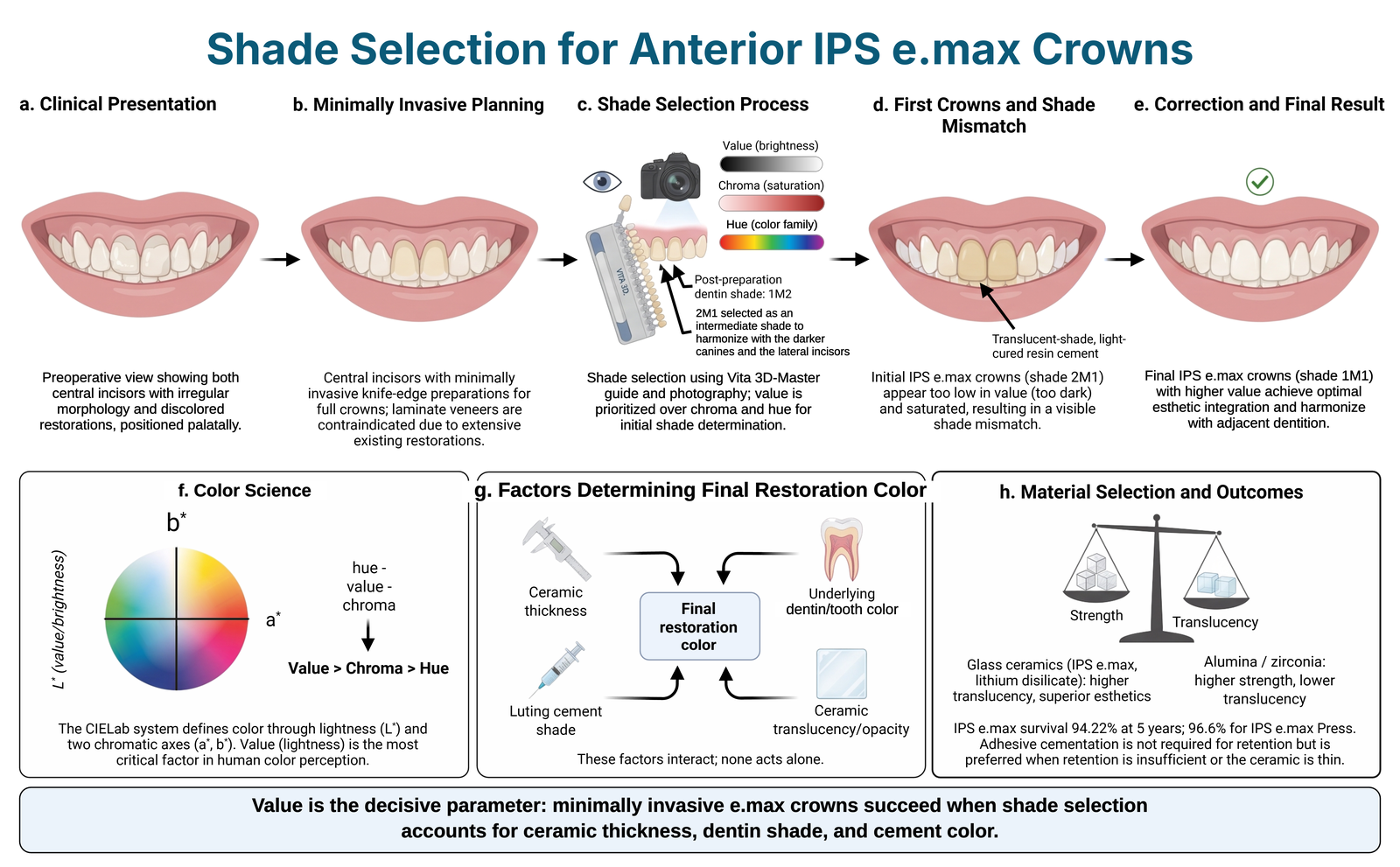
  • Graphical abstract: Shade selection for anterior IPS e.max crowns

    Shade selection for IPS e.max lithium disilicate crowns on maxillary central incisors: A case report and literature review

    Shade selection is a critical step in the esthetic rehabilitation of anterior teeth, because the final appearance of an all-ceramic restoration depends on the selected shade, the ceramic material and its thickness, the color of the underlying tooth structure, and the luting cement. This case report and literature review describes the restoration of both maxillary central incisors with IPS e.max lithium disilicate crowns. A 32-year-old woman with a history of dental trauma and repeated composite restorations was dissatisfied with the appearance of her maxillary central incisors, which were lingually inclined, contained extensive composite resin restorations, and showed morphological irregularities. A conservative plan limited to these two teeth was adopted, and IPS e.max crowns were preferred over laminate veneers because of the volume of the existing restorations. After minimal buccal reduction with a knife-edge finish line, shade was selected with the Vita 3D-Master guide and clinical photographs, and the prepared dentin shade (1M2) was also recorded. The first crowns, fabricated in shade 2M1 and cemented with a translucent light-cured resin cement, appeared darker than the neighboring teeth. One week later, they were replaced with higher-value 1M1 crowns, which were cemented with a bleach-shade cement using the same bonding protocol. At the 6-month follow-up, the restorations blended with the neighboring dentition in color, form, and surface texture. The reviewed literature indicates that visual shade selection is subjective and is best combined with instrumental methods; that value is the most important dimension of color perception; and that ceramic thickness, substrate color, and cement shade can cause perceptible color differences in glass-ceramic restorations. Within the limitations of a single case, natural esthetic results can be achieved even when only two anterior teeth are restored, provided that visual and digital methods are combined, the color–material–cement interaction is managed, and clinician and technician communicate closely.
    Ceramics, color perception, crowns, dental esthetics, prosthesis coloring, resin cements
    Ekin Gökmen Akmansu, Nihal Özcan
    03.11.2026
    e260671
    Abstract Views: 124 Download: 118 DOI 10.5577/intdentres.671
  • Accuracy of artificial intelligence responses on antibiotic use in endodontics

    Aim: The increasing application of generative artificial intelligence (AI) large language models (LLMs) in various fields, including dentistry, gives rise to questions regarding the reliability of the information they produce. The objective of this study was to analyze the accuracy and consistency of responses provided by three artificial intelligence chatbots when answering questions about antibiotic use in endodontics. Methodology: A total of 24 questions (12 dichotomous, 12 open-ended) were developed based on the American Dental Association (ADA) clinical practice guideline on antibiotic use for the urgent management of pulpal- and periapical-related dental pain and intraoral swelling. The questions were presented to three AI chatbots: ChatGPT 3.5, Google Bard (Gemini), and Microsoft Copilot. The questions were asked three times a day over the course of 10 days. The responses obtained were categorized as correct, incorrect, or insufficient according to the guidelines. The results were statistically analyzed using the chi-square test. Results: A total of 2,160 responses were collected from AI chatbot platforms. The overall accuracy rate for responses regarding antibiotic use for dental pain was 72.5%. A statistically significant difference was observed among the accuracy rates of the platforms (p < 0.05), with ChatGPT achieving 82.4%, Google Gemini 71.3%, and Microsoft Copilot 63.7%. No statistically significant differences were found in the accuracy of responses across the morning, noon, and evening sessions for any of the models (p > 0.05). Conclusion: Although AI chatbots hold promise as supplementary knowledge sources for patient guidance in dentistry, their current responses, particularly in response to open-ended questions, lack the depth and reliability required for antibiotic use. Continued efforts are necessary to optimize these tools to ensure clinical relevance and patient safety in endodontic antibiotic therapy.
    Antibiotics, accuracy, artificial intelligence, chatbot, ChatGPT, Gemini, Copilot, LLM, natural language processing
    Vahide Hazal Abat, Mert Veznikli
    28.03.2026
    e260681
    Abstract Views: 908 Download: 479 DOI 10.5577/intdentres.681
  • Evaluating the accuracy of ChatGPT and Gemini models in dental specialty exams: A comparative study of pediatric and restorative dentistry

    Aim: The integration of large language models (LLMs) such as ChatGPT and Gemini into healthcare education presents novel opportunities for knowledge dissemination and assessment. Despite their growing prominence, empirical evidence regarding their reliability and domain-specific accuracy in dental specialty examinations remains limited. This study aimed to evaluate and compare the performance of four AI-driven LLMs—ChatGPT-3.5, ChatGPT-4o, Gemini 2.0 Flash, and Gemini 2.0 Advanced— by employing official past questions from the Turkish Dental Specialty Examination (DUS) in Pediatric Dentistry and Restorative Dentistry. Methodology: A total of 178 multiple-choice questions (90 in Restorative Dentistry and 88 in Pediatric Dentistry) were obtained from DUS examinations conducted between 2012 and 2017. All items were presented in Turkish to each model via standardized prompts in isolated sessions to prevent cross-interaction and memory bias. Response accuracy was determined by evaluating the correctness of the chosen answers. Comparative analyses between models, domains, and annual trends were conducted using non-parametric statistical tests, including the Mann–Whitney U and Friedman tests. Results: ChatGPT-4o achieved the highest overall accuracy across both Pediatric (90.88%) and Restorative Dentistry (93.02%), whereas ChatGPT-3.5 exhibited the lowest performance in Pediatric Dentistry (70.71%). Statistically significant inter-model differences were observed in Pediatric Dentistry (p = 0.002), but not in Restorative Dentistry (p = 0.254). Temporal analyses highlighted the consistent performance of ChatGPT-4o, while Gemini 2.0 Flash displayed marked fluctuations in accuracy across certain years and subdomains. Conclusion: Among the evaluated LLMs, ChatGPT-4o demonstrated superior and stable performance in addressing dental specialty exam questions, particularly in content requiring contextual comprehension. These findings underscore the potential of advanced AI tools to enhance dental education and examination readiness. Nonetheless, appropriate model selection should be tailored to the complexity of the task, domain specificity, and pedagogical objectives.
    Large language models, dental specialty examination, ChatGPT, Gemini, dental education, artificial intelligence
    Ayşenur Altuğ Yıldırım, Menekşe Alim
    28.06.2026
    e260673
    Abstract Views: 631 Download: 309 DOI 10.5577/intdentres.673
  • Comparison of the accuracy of different electronic apex locators used in working length determination via changing of initial cleaning solutions

    Aim: The aim of this study is to compare the accuracy of the Root ZX Mini, Raypex 6, E-Pex Pro, and Propex Pixi electronic apex locators by changing the initial cleaning solutions (NaOCl vs.  EDTA). Methodology: Eighty mandibular premolar teeth were used. Radiographs were obtained from the mesio-distal and bucco-lingual angles for all teeth, and teeth with suspected external or internal root resorption and/or calcified canals were not included in the study. The true canal lengths of the teeth were determined with a precision of 0.01 mm with a stereomicroscope at x5 magnification by placing a #20 K-type canal file into the root canal. The samples were then embedded in freshly mixed alginate blocks up to the cemento-enamel junction. The coronal 1/3 was pre-enlarged with a Protaper SX instrument. Electronic apex finders (Root ZX Mini, Raypex 6, E-Pex Pro, Propex Pixi) specified on each tooth were used, and measurements were made by changing the initial solutions (NaOCl vs. EDTA). Distilled water was used between application of 5.25% NaOCl and 17% EDTA to prevent chemical interactions. Three measurements were taken for each tooth, and the average of these 3 measurements was taken as reference. The data obtained in this study were analyzed. Results: There were no statistically significant differences between the solutions in terms of the measurement values and actual length values found by each device (p>0.05). Although there were no statistically significant differences, the deviation from the actual measurement was greater when EDTA solution was used than when NaOCl solution was used. In addition, although the difference was not found to be statistically significant, the deviation from the actual measurement was found to be highest when the Root ZX mini device was used with NaOCl and EDTA solution. Conclusion: The results of this study showed that the difference in the initial washing solutions did not affect the EAL devices in making measurements close to the true length.   How to cite this article: Tellioğlu Avcı GR, Kaya S Comparison of the accuracy of different electronic apex locators used in working length determination via changing of initial cleaning solutions. Int Dent Res 2021;11(Suppl.1):56-62.  https://doi.org/10.5577/intdentres.2021.vol11.suppl1.9   Linguistic Revision:  The English in this manuscript has been checked by at least two professional editors, both native speakers of English.  
    working length, apex locator, initial solutions
    Güliz Rana Tellioğlu Avcı, Sadullah Kaya
    30.09.2021
    56-62
    Abstract Views: 1932 Download: 693 DOI 10.5577/intdentres.2021.vol11.suppl1.9
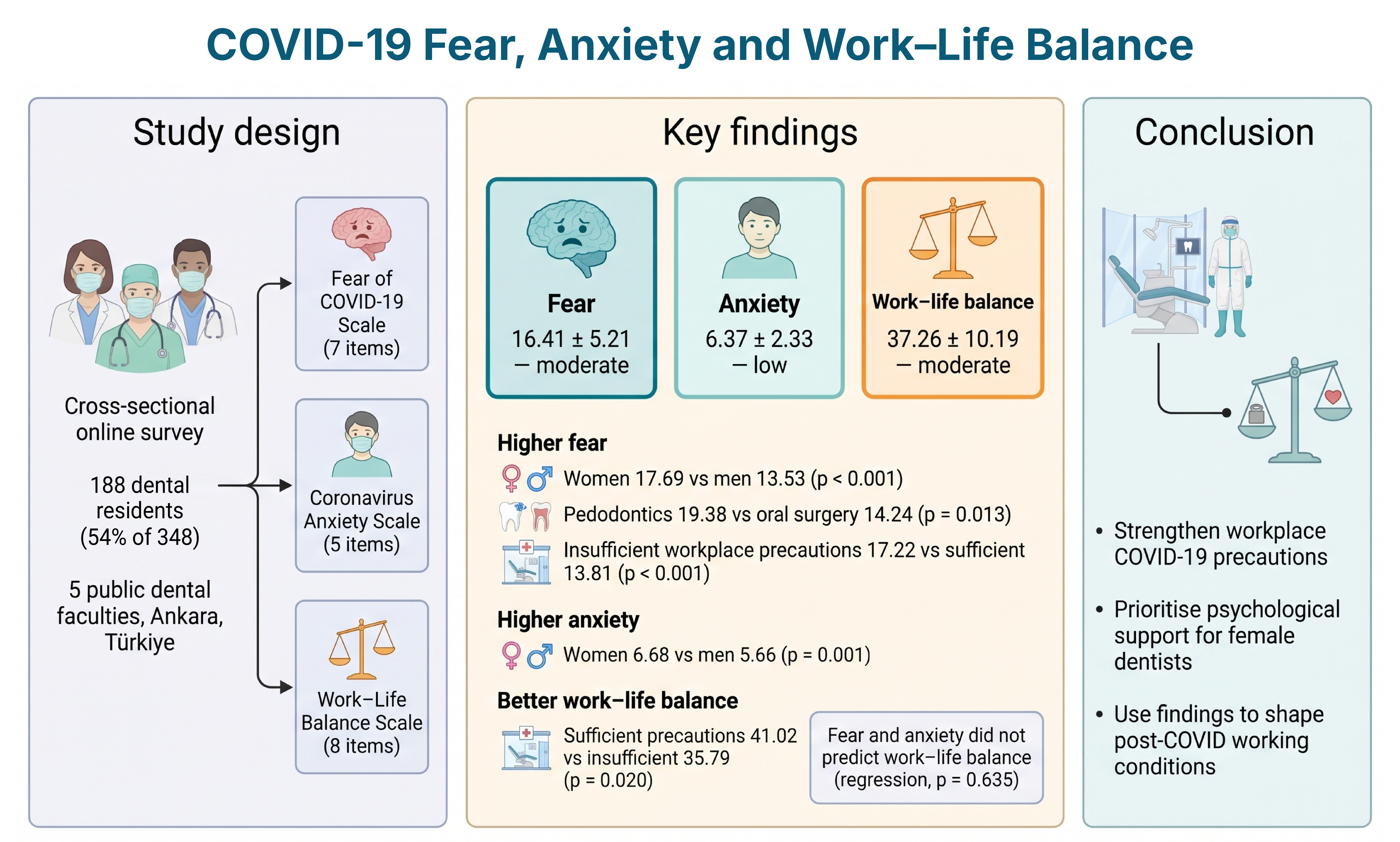
  • Graphical abstract: COVID-19 fear, anxiety and work-life balance among dental residents

    Evaluation of dentists' fear, anxiety, and work-life balance during the COVID-19 pandemic

    Aim: This study aimed to determine the fear and anxiety levels and work-life balance of postgraduate dental residents during the COVID-19 pandemic and to examine the relationships among these variables. Methodology: This descriptive, cross-sectional study used a correlational design. The study included 188 of 348 postgraduate dental residents (54%) at five public universities in Ankara, Türkiye, who completed an online survey. Data were collected using the COVID-19 Fear Scale, the COVID-19 Anxiety Scale, and the Work-Life Balance Scale. Data were analyzed using the Mann–Whitney U , Kruskal–Wallis H , one-way ANOVA, and Spearman correlation tests. Results: The mean scores were 16.41 ± 5.21 for fear, 6.37 ± 2.33 for anxiety, and 37.26 ± 10.19 for work-life balance. Fear and anxiety levels were higher among female and younger dentists and among those who considered COVID-19 a serious disease. Fear levels were also higher among pedodontists, those who had received COVID-19 training, and those who found the work environment inadequate for disease prevention. Work-life balance levels were significantly lower among those who found the precautions insufficient and were weakly correlated with COVID-19 knowledge ( r = 0.180) and the perception of COVID-19 as a serious disease ( r = 0.164). No relationship was found between work-life balance and COVID-19-related fear and anxiety. Conclusion: Fear and anxiety among postgraduate dental residents during the COVID-19 pandemic were associated with sex, age, specialty, training, and perceived workplace adequacy, but not with work-life balance. Creating working conditions that reduce fear and anxiety and support work-life balance is therefore important. The results can be used to develop policies regulating the working conditions of dentists in the post-COVID period.
    Anxiety, COVID-19, dentists, fear, graduate dental education, work-life balance
    Merve Önder, Fatih Durur, Gamze Kutlu, Yasemin Akbulut, Kaan Orhan
    04.11.2026
    e260537
    Abstract Views: 206 Download: 335 DOI 10.5577/intdentres.537
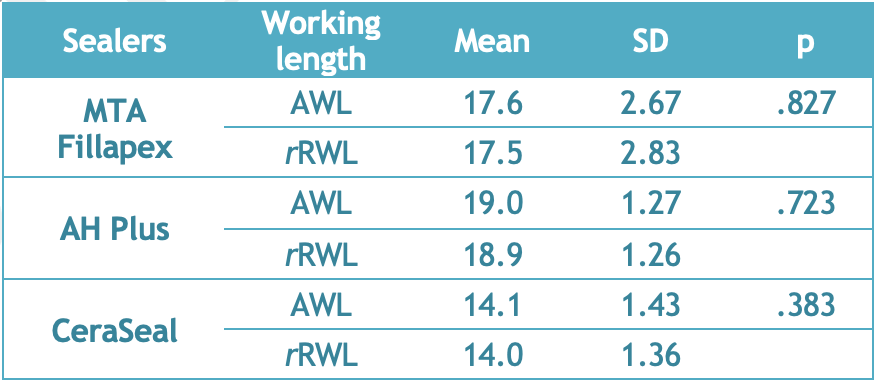
  • Performance of two different electronic apex locators during the removal of calcium silicate-based sealers

    Aim: The aim of this in vitro study is to evaluate the accuracy of Root ZX and Propex Pixi during the retreatment of root canals obturated with different calcium silicate-based root canal sealers. Methodology: Root canals of ninety human premolar teeth were shaped with ProTaper universal rotary files up to size F2 under 5.25% NaOCl irrigation for the present study. Root canal filling was carried out by lateral condensation technique using with gutta-percha and sealers; MTA Fillapex, CeraSeal or AH Plus. After seven days, the obturating materials were removed using D-Race files. While actual working length was recorded by direct observation, electronic working lengths were determined by Propex Pixi or Root ZX for tolerance limits of 0.5 mm and 1.0 mm. Data were analyzed using Shapiro Wilk, Mann-Whitney U, and Kruskal-Wallis tests ( p < 0.05). Results: The performance of Propex Pixi and Root ZX was found to be statistically similar and did not differ on the root canals filled with different root canal sealers ( p < 0.05). Propex Pixi and Root ZX demonstrated more accurate measurements in the range of ±1 mm compared to ±0.5 mm in all groups, regardless of the type of root canal sealer used when filling the root canals before retreatment ( p < 0.05). Conclusion: Root ZX and Propex Pixi can be used confidently in the retreatment of the root canals in which CeraSeal, MTA Fillapex, and AH Plus are used as sealers.   How to cite this article: Göçer PA, Durmazpınar PM, Baştürk FB. Performance of two different electronic apex locators during the removal of calcium silicate-based sealers. Int Dent Res 2023;13(S1):20-25. https://doi.org/10.5577/idr.2023.vol13.s1.3   Linguistic Revision:  The English in this manuscript has been checked by at least two professional editors, both native speakers of English.
    Apex locator, apical constriction, calcium silicate-based sealer, retreatment, working length
    Pelin Andaç Göçer, Parla Meva Durmazpınar, Fatima Betül Baştürk
    15.10.2023
    20-25
    Abstract Views: 1572 Download: 481 DOI 10.5577/idr.2023.vol13.s1.3
  • Evaluation of the dimensional compatibility of bioceramic-impregnated gutta-percha cones with ISO standards

    Aim: This study aimed to comprehensively evaluate the dimensional compatibility of bioceramic-impregnated gutta-percha cones across four ISO sizes (#20, #25, #35, and #45) by measuring their tip diameters (D0) with ISO 6877 size standards using a quantitative, in vitro approach. Methodology: Bioceramic-impregnated gutta-percha cones with four different sizes were selected, and tip diameters (D0) were measured using an endodontic gauge ruler. Groups were #20 (primary), #25 (small), #35 (medium), and #45 (large), each containing 20 gutta-percha samples. All testing was performed in accordance with ISO 6877. Cones were categorized as compliant, undersized, or oversized. A chi-square test (p = 0.74) was conducted to assess intergroup differences. Results: 72.5% of cones met ISO standards, while 27.5% were undersized. No cones were oversized. The rates of compliance across groups varied slightly but not statistically significantly. Conclusion: While most cones comply with ISO 6877 standards, a notable proportion did not, indicating the need for enhanced manufacturing precision. The gutta-percha used during the cone fit trial may be used for the final obturation without being replaced with a new one from the package until manufacturers ensure comprehensive standardization.
    Bioceramic impregnated, gutta-percha, ISO 6877, standardization, dimensional accuracy, root canal obturation
    Melis Yılmaz, Celalettin Topbaş, Emre Övsay, Ayfer Atav
    31.12.2025
    159-164
    Abstract Views: 761 Download: 280 DOI 10.5577/intdentres.689
  • Support vector machine-based diagnostic classification of caries and healthy teeth in panoramic orthopantomography images

    Aim: This study proposes a support vector machine (SVM)-based classification model for detecting dental caries in panoramic dental orthopantomography (OPG) images. The primary objective is to develop a computationally efficient, reproducible, and clinically adaptable method that enables the automatic differentiation between carious and healthy tooth structures. Methodology: The images used in the study were first subjected to standard resizing and normalization steps. The extracted features were then prepared for classification through feature scaling, feature selection, and dimensionality reduction processes. Hyperparameter grid search, stratified k-fold cross-validation, and decision threshold optimization were applied during the model development process. Medically meaningful metrics, including accuracy, precision, sensitivity, F1 score, area under the receiver operating characteristic (ROC) curve (AUC), and the confusion matrix, were used in the performance evaluation. Results: The SVM model demonstrated balanced and stable performance throughout cross-validation. ROC and Precision–Recall analyses showed that the model has a high capacity to distinguish between decayed and healthy classes. Decision threshold scanning revealed that false-positive and false-negative rates can be optimized according to clinical requirements. Conclusion: The results show that the proposed SVM-based approach offers a reliable and feasible method for automatic caries detection from panoramic OPG images. This study highlights that traditional machine learning methods, when combined with structural feature engineering, are suitable for supporting dental diagnosis processes. Future studies should test the model on larger datasets and perform multi-classification of different dental pathologies.
    Support vector machine, machine learning, deep learning, hyperparameter, dentistry, panoramic dental radiography, caries classification
    Süleyman Dal, Yasin Sönmez
    31.12.2025
    136-147
    Abstract Views: 1256 Download: 326 DOI 10.5577/intdentres.696
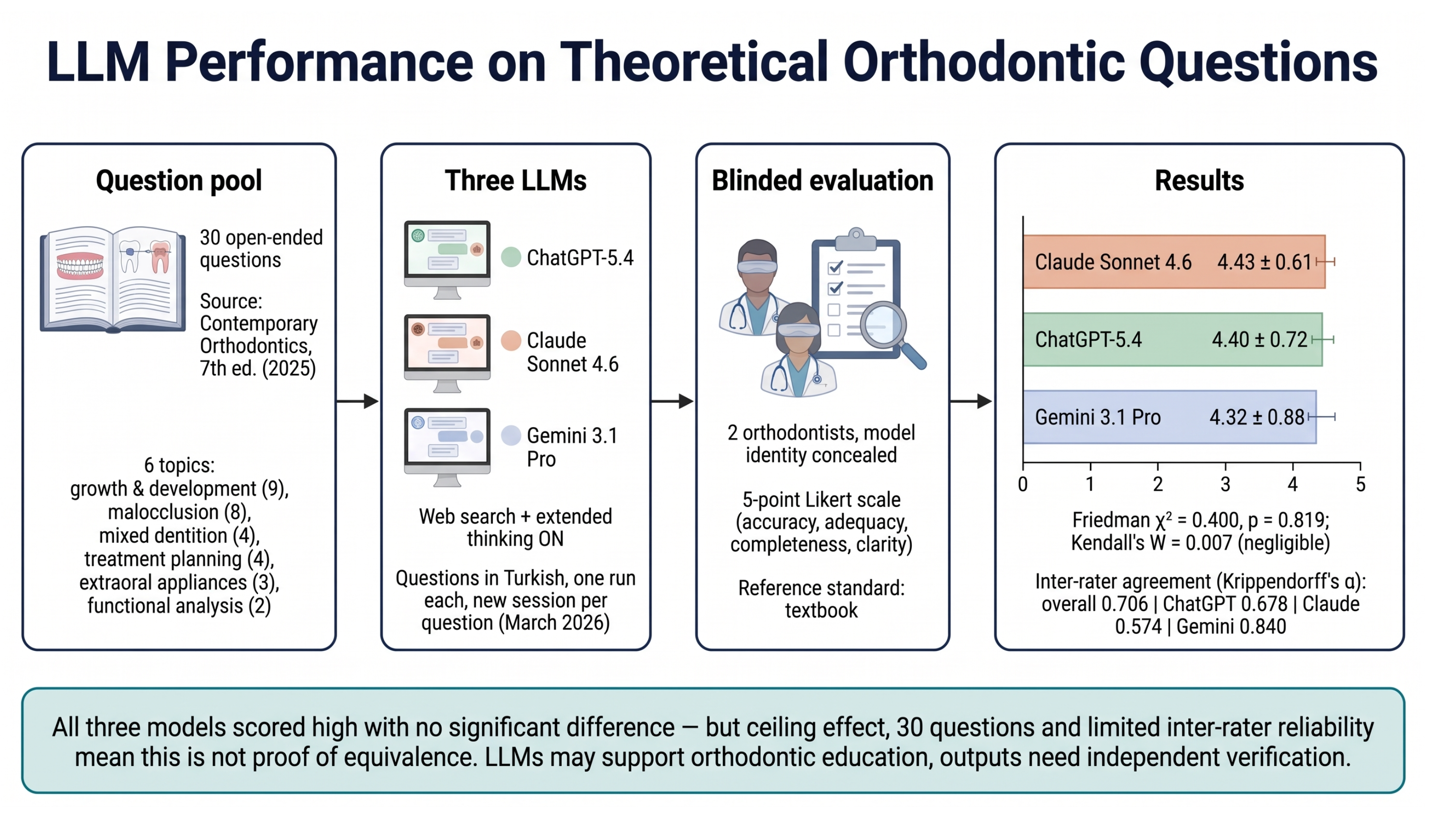
  • Comparative analysis of the performance of ChatGPT-5.4, Claude Sonnet 4.6, and Gemini 3.1 Pro large language models on theoretical orthodontic questions

    Aim: This study aimed to comparatively evaluate the performance of ChatGPT-5.4, Claude Sonnet 4.6, and Gemini 3.1 Pro large language models (LLMs) in answering theoretical orthodontic questions under web search-enabled conditions. Methodology: A total of 30 open-ended questions covering the topics of growth and development, functional analysis, mixed dentition, extraoral appliances, malocclusion, and orthodontic treatment planning were prepared from Contemporary Orthodontics (7th edition, 2025). The questions were presented to all three models under standardized conditions in separate sessions in March 2026 with web search enabled. The responses were anonymized and independently evaluated in a blinded manner by two orthodontists using a 5-point Likert scale incorporating accuracy, scientific adequacy, completeness, and clarity into a single overall score. Data were analyzed using IBM SPSS Statistics (version 31.0); the Friedman test was used for model comparisons, and statistical significance was set at p < 0.05. Results: Mean performance scores were 4.40 ± 0.72 for ChatGPT-5.4, 4.43 ± 0.61 for Claude Sonnet 4.6, and 4.32 ± 0.88 for Gemini 3.1 Pro. Median scores were 4.50, 4.50, and 4.75, respectively. No statistically significant difference in overall performance was found among the models (χ² = 0.400; df = 2; p = 0.819; Kendall's W = 0.007). Subgroup analyses by topic category also revealed no significant differences in any category (all p > 0.05). Inter-rater reliability was limited (α = 0.706). Conclusion: All three models achieved high-performance scores, with no statistically significant difference in overall performance among them; this does not establish equivalence. With independent verification, these LLMs may serve as supportive tools in orthodontic education.
    Artificial intelligence, ChatGPT, dental education, knowledge assessment, large language models, orthodontics
    Buket Erdem, Salih Baver Ataş, Meriç Arslan, Çağla Şar
    19.10.2026
    e260777
    Abstract Views: 346 Download: 135 DOI 10.5577/intdentres.777
  • Comparative evaluation of the dimensional compatibility of ISO #30/.06 gutta-percha cones from four different manufacturers using an endodontic gauge

    Aim: Gutta-percha is the most commonly used biocompatible obturation material in endodontics for the three-dimensional and hermetic sealing of the root canal system. However, despite the dimensions defined in the ISO 6877 standard, dimensional discrepancies between gutta-percha cones and endodontic files have been reported. The aim of this study was to comparatively evaluate the dimensional variability of ISO #30/.06 gutta-percha cones from four different manufacturers using an endodontic gauge. Methodology: A total of 240 ISO #30/.06 gutta-percha cones (n = 60 per brand) from four manufacturers (ProTaper Ultimate, MetaBiomed, Diadent, and EndoArt) were evaluated. Cone diameters were measured at the D0, D5, D10, and D15 levels using a Woodpecker R1 Plus endodontic gauge. Based on the ISO 6877 nominal dimensions, measurements were categorized as undersized, within the nominal range, or oversized. Statistical analysis was performed using Pearson's chi-square and Fisher's exact tests with Bonferroni correction (p < 0.05). Results: Dimensional discrepancies from the nominal ISO values were observed across all measurement levels, with statistically significant differences among the brands (p < 0.05). ProTaper Ultimate and MetaBiomed showed the highest compatibility with nominal dimensions, whereas EndoArt exhibited a consistently high proportion of undersized cones (57.1–67.2%) across all regions. Diadent showed a notably high proportion of oversized cones at the D15 level (66.7%). Effect sizes for between-brand comparisons were large at every level (Cramer's V = 0.386–0.503). Conclusion: ISO #30/.06 gutta-percha cones from different manufacturers did not show complete dimensional compatibility. These discrepancies may adversely affect apical adaptation, particularly in single-cone obturation techniques, potentially reducing clinical success. The use of an endodontic gauge provides a practical means of objectively verifying cone–canal adaptation in clinical practice, helping to prevent microleakage and obturation errors.
    Gutta-percha, endodontic gauge, dimensional compatibility, root canal treatment, dimensional accuracy, ISO 6877, root canal obturation
    Kumru Şaz, Hülya Nur Nalbant, Celalettin Topbaş
    11.07.2026
    e260664
    Abstract Views: 505 Download: 157 DOI 10.5577/intdentres.664
1 - 14 of 14 items

Journal Issue

Vol. 16 (2026): International Dental Research
Vol. 16 (2026) Continuous Publication
View Current Issue

Published Volumes

2026
  • Vol. 16 (2026): International Dental Research
  • Vol. 16 No. S1 (2026): International Dental Research
  • Vol. 16 No. Advanced Online (2026): International Dental Research
2025
  • Vol. 15 No. 3 (2025): International Dental Research
  • Vol. 15 No. 2 (2025): International Dental Research
  • Vol. 15 No. 1 (2025): International Dental Research
2024
  • Vol. 14 No. 3 (2024): International Dental Research
  • Vol. 14 No. Suppl. 1 (2024): International Dental Research
  • Vol. 14 No. 2 (2024): International Dental Research
  • Vol. 14 No. 1 (2024): International Dental Research
  • 2024: Advanced Online
2023
  • Vol. 13 No. S1 (2023): International Dental Research
  • Vol. 13 No. 3 (2023): International Dental Research
  • Vol. 13 No. 2 (2023): International Dental Research
  • Vol. 13 No. 1 (2023): International Dental Research
2022
  • Vol. 12 No. Suppl. 1 (2022): International Dental Research
  • Vol. 12 No. 3 (2022): International Dental Research
  • Vol. 12 No. 2 (2022): International Dental Research
  • Vol. 12 No. 1 (2022): International Dental Research
  • No. Accepted Articles: International Dental Research
Show more Show less
2021
  • Vol. 11 No. 3 (2021): International Dental Research
  • Vol. 11 No. Suppl. 1 (2021): International Dental Research
  • Vol. 11 No. 2 (2021): International Dental Research
  • Vol. 11 No. 1 (2021): International Dental Research
2020
  • Vol. 10 No. 3 (2020): International Dental Research
  • Vol. 10 No. 2 (2020): International Dental Research
  • Vol. 10 No. 1 (2020): International Dental Research
2019
  • Vol. 9 No. 3 (2019): International Dental Research
  • Vol. 9 No. 2 (2019): International Dental Research
  • Vol. 9 No. 1 (2019): International Dental Research
2018
  • Vol. 8 No. 3 (2018): International Dental Research
  • Vol. 8 No. 2 (2018): International Dental Research
  • Vol. 8 No. 1 (2018): International Dental Research
2017
  • Vol. 7 No. 3 (2017): International Dental Research
  • Vol. 7 No. 2 (2017): International Dental Research
  • Vol. 7 No. 1 (2017): International Dental Research
2016
  • Vol. 6 No. 1 (2016): Volume 6, No 1, 2016
2012
  • Vol. 2 No. 3 (2012): Volume 2, No 3, 2012
  • Vol. 2 No. 1 (2012): Volume 2, No 1, 2012
  • Vol. 2 No. 2 (2012): Volume 2, No 2, 2012
2011
  • Vol. 1 No. 3 (2011): Volume 1, No 3, 2011
  • Vol. 1 No. 2 (2011): Volume 1, No 2, 2011
  • Vol. 1 No. 1 (2011): Volume 1, No 1, 2011

socialshare

Submit Your Paper
Become a Reviewer

sidebarmenu

Journal Menu

 Home

 Aims & scopes

 Editorial Board

 Author Guidelines

 Abstracting & Indexing

 Peer Review Process

 Ethics Statement

 Plagiarism Policy

 Digital Archiving Policy

 Corrections and Retractions

 Journal History

 Journal Statistics

 Society Information

 Congresses & Events

 Language Editing

 Contact

idr


Citations
Updated daily Google Scholar
All Since 2021
Citations 1073 873
h-index 13 11
i10-index 18 12
0 50 100 150 200 250
  • 37 2019
  • 50 2020
  • 71 2021
  • 112 2022
  • 146 2023
  • 140 2024
  • 202 2025
  • 199 2026
Citations per year
Year Citations
2019 37
2020 50
2021 71
2022 112
2023 146
2024 140
2025 202
2026 (to date) 199

2026 counts citations recorded so far this year.

icmje and ithenticate

Indexed in CiteLink

EBSCO

TR Dizin Journal List

Keywords

Information

  • For Readers
  • For Authors
  • For Librarians

Latest publications

  • Atom logo
  • RSS2 logo
  • RSS1 logo
Most Read Articles
  • Endodontic Irrigation Solutions: A Review
    13336 13336 views 2017
  • Mechanical properties of resin composites containing bioactive glass and experimental nano zinc-silica complex
    11127 11127 views 2021
  • Areas for use of PEEK material in dentistry
    9560 9560 views 2018
  • Comparative evaluation of the responses from ChatGPT-5, Gemini 2.5 Flash, and DeepSeek-V3.1 chatbots to patient inquiries about endodontic treatment in terms of accuracy, understandability, and readability
    7864 7864 views 2025
  • Evaluation of the color stability and surface roughness of dual-cure, bulk-fill composites
    7181 7181 views 2021

announcement

Announcement

visitors

Visitors 

Flag Counter

Web Analytics

View My Stats

Most Cited Articles
  • Areas for use of PEEK material in dentistry
    162 162 citations 2018
  • Contemporary Permanent Luting Agents Used in Dentistry: A Literature Review
    61 61 citations 2011
  • The Latest Developments Related to Composite Resins
    44 44 citations 2017
  • PEEK in dentistry, properties and application areas
    37 37 citations 2020
  • A Literature Review of Self Adjusting File
    31 31 citations 2011

Browse

  • Categories
    • Open Access
    • Original Article
    • Review
    • Case Report
    • Letter to Editor
logo
E-ISSN: 2146-1767

Download App

Contact

Publisher: International Dental Research

Email: info@dental-research.com

Website: www.dental-research.com

Address: Publisher ZEUS PUBLISHING www.zeuspublishing.com

Social Media

ElsevierCiteLinkEBSCOOpen AccessCrossrefGoogle ScholarCOPECreative Commons

Copyright © 2011-2026 | International Dental Research. All rights reserved.
CC BY Open Access articles are distributed under the terms of the Creative Commons Attribution 4.0 International License,
which permits unrestricted use, distribution, and reproduction provided the original work is properly cited.

Privacy notice

This journal stores a session cookie that is required for the site to work, and keeps usage statistics that do not identify you.

More information