Skip to main content Skip to main navigation menu Skip to site footer
logo
  • Login
  • Register
E-ISSN: 2146-1767
  • Home
  • Current Issue
  • Archives
  • For Authors
    • Author Guidelines
    • Online Submission
    • Reference Style
    • Call for Papers
    • Language Editing Service
  • For Reviewers
    • Reviewer Guidelines
    • Become a Reviewer
    • Reviewer Resources
  • Ethics & Policies
    • Artificial Intelligence (AI) Policy
    • Authorship and Contributorship
    • Conflicts of Interest
    • Copyright and Permission
    • Corrections and Retractions
    • Crossmark Policy
    • Editorial Policy
    • Human and Animal Rights
    • Informed Consent Policy
    • Journal Management
    • Open Access Statement
    • Research Ethics Policy
    • Publication Ethics Policy
  • Journal Info
    • About
    • Abstracting & Indexing
    • Peer Review Process
    • Publication Fee
    • Society Information
    • Useful Links
    • Contact
  1. Home /
  2. Search

Search

Advanced filters
Published After
Published Before

Search Results

##search.searchResults.foundPlural##
  • Assessment of self-reported symptoms and oral health-related quality of life in patients requiring periodontal treatment

    Aim: Oral health-related quality of life (OHRQoL) refers to the impact of social, psychological, and functional factors, as well as problems in the oral-facial region, on individuals’ well-being. This observational study aimed to evaluate the relationship between self-reported symptoms and OHRQoL and the periodontal status of patients presenting for periodontal treatment. Methodology: The study comprised 170 individuals recruited from the Department of Periodontology at Necmettin Erbakan University. Participants were divided into three groups based on their periodontal status: periodontally healthy (65 individuals), gingivitis (51 individuals), and periodontitis (54 individuals). Various clinical periodontal parameters, such as the plaque index (PI), gingival index (GI), bleeding on probing (BoP), tooth mobility, and clinical attachment loss (CAL), were assessed alongside self-reported periodontal symptoms. Additionally, participants completed the Oral Health Impact Profile-14 (OHIP-14) questionnaire. Results: Both the periodontitis and gingivitis groups exhibited similar outcomes concerning gingival redness and gingival bleeding during brushing. However, a significantly higher number of affirmative responses for other symptoms were recorded in the periodontitis group ( p <0.05). Additionally, the periodontitis group had the highest total OHIP-14 scores and subscale scores, while the periodontally healthy group exhibited the lowest scores ( p <0.05). Conclusion: This study demonstrates a significant relationship between OHRQoL, patients' self-reported symptoms, and periodontitis.    How to cite this article: Taştan Eroğlu Z, Yıldız K, Uçan Yarkaç F, Özkan Şen D, Babayiğit O. Assessment of self-reported symptoms and oral health-related quality of life in patients requiring periodontal treatment. Int Dent Res. 2024;14(S1):36-44. https://doi.org/10.5577/indentres.554
    OHRQoL, oral health, periodontitis, OHIP-14, quality of life, periodontal symptoms
    Zeynep Taştan Eroğlu, Kaan Yıldız, Fatma Uçan Yarkaç, Dilek Özkan Şen, Osman Babayiğit
    31.12.2024
    36-44
    Abstract Views: 1794 Download: 451 DOI 10.5577/indentres.554
  • Evaluation of the periodontal status of a patient diagnosed with Sheehan syndrome: A case report

    Aim: Some immunological changes occurring in mothers during pregnancy increase their susceptibility to infections, including periodontal infections. Sheehan syndrome (SS) is a disease that occurs because of severe postpartum hemorrhage causing ischemic pituitary necrosis. The presence of multiple hormonal deficiencies leads to the impairment of bone microarchitecture, which can cause osteopenia and even osteoporosis. Osteoporosis and periodontitis are both chronic diseases characterized by bone loss. Moreover, recent studies have shown that there is a relationship between menopause, osteoporosis, alveolar bone resorption, and tooth loss. This case report aims to evaluate the oral and periodontal status of a patient with SS and to raise awareness about dental and periodontal problems that may occur in such patients. Methodology: A 63-year-old female patient diagnosed with SS in the endocrinology clinic was referred to the periodontology clinic with complaints of multiple tooth loss, mobility in her teeth, and gingival bleeding. In the clinical and radiographic examination of the patient, it was determined that all teeth had horizontal bone resorption; moreover, there was mobility in the mandibular anterior teeth and hemorrhage in the gums. When the patient’s laboratory results were examined, it was seen that the basal plasma levels of free triiodothyronine (T3) and thyroxine (T4), growth hormone (GH), prolactin (PRL), follicle stimulating hormone (FSH), luteinizing hormone (LH), progesterone, and total testosterone values were significantly lower, and the anterior pituitary elevation was significantly decreased in pituitary magnetic resonance (MR) imaging. Conclusion: The periodontium is the target tissue of sex and other hormones. Hormonal changes may affect the inflammatory–immune tissue responses of periodontal tissues. Many studies have shown that thyroid and sex hormones affect oral and especially periodontal tissues. The degradation of hormonal hemostasis may induce a series of pathological events in the oral environment, resulting in inflammatory changes in gingival tissues, periodontal attachment losses, and destruction of the alveolar bone. Systemic diseases that affect hormonal conditions, such as SS, must be considered in the evaluation of oral health. Medical physicians should refer their patients to the dentist for consultation when evaluating patients’ hormonal status and planning their treatment.   How to cite this article: Şen SC, Saygun NI, Or Koca A, Özcan E. Evaluation of the periodontal status of a patient diagnosed with Sheehan syndrome: A case report. Int Dent Res 2021;11(Suppl.1):308-11. https://doi.org/10.5577/intdentres.2021.vol11.suppl1.46     Linguistic Revision:  The English in this manuscript has been checked by at least two professional editors, both native speakers of English.  
    Sheehan syndrome, hormones, periodontal status
    Seval Ceylan Şen, Nuriye Işıl Saygun, Arzu Or Koca, Erkan Özcan
    30.09.2021
    308-311
    Abstract Views: 1431 Download: 628 DOI 10.5577/intdentres.2021.vol11.suppl1.46
  • Determination of Periodontal Status and Smoking Habits with CPITN Index

    Aim: Periodontal diseases are a major worldwide and is considered to be one of the most common oral pathologies. A large portion of periodontal pathologies are affected by a variety of factors genetic, socio-economic status, smoking, oral hygiene and lifestyle. The relationship between smoking and periodontal disease attracting more and more interest in the last 10-15 years. This study was planned to determine whether there is a relationship between smoking habits and periodontal status. Methodology: In this study, 372 individuals were evaluated between the ages 12-79. These individuals divided into 7 groups according to age, including 12-19, 20-29, 30-39, 40-49, 50-59, 60-69, and 70-79. CPITN scores and whether or not cigarette smoking habits of all individuals were recorded. Daily cigarette consumption was evaluated 0, occasionally, 1-10, 11-20 and more than 20.  Results: In our study, no significant statistical difference was found between the age groups and gender (p>0.05). There is a relationship proportional to the age and periodontal disease (p<0.05). Periodontal status of individuals who smoke analyzed, although individuals who smoke have higher periodontal scores, statistically significant relationship was not found between the two groups. Conclusions: Examined the periodontal status of the individuals included in the study, there is no difference between smokers and nonsmokers with individuals, despite the periodontal scores were higher in smokers. It is suggested that oral hygiene education would be effective in the rate of smoking and periodontal health. How to cite this article: Saribas E, Acun Kaya F, Dogru AG, Talo Yildirim T. Determination of periodontal status and smoking habits with CPITN index. Int Dent Res 2017;7:26-31.  
    Periodontal diseases, smoking, epidemiologic methods, CPITN
    Ebru Saribas, Filiz Acun Kaya, Arzum Guler Dogru, Tuba Talo Yildirim
    31.08.2017
    26-31
    Abstract Views: 2905 Download: 1311 DOI 10.5577/intdentres.2017.vol7.no2.2
  • Use of novel polyetheretherketone (PEEK) polymer in pediatric dentistry

    The purpose of this study is to discuss the applications of PEEK in pediatric dentistry and the advantages of PEEK material in terms of periodontal health. In pediatric dentistry, there is a continuous search for biocompatible, esthetic, and durable materials to overcome the limitations of conventional options such as stainless steel and zirconia. Polyetheretherketone (PEEK), a high-performance semicrystalline polymer, has emerged as a novel alternative due to its superior mechanical properties, resistance to heat and chemicals, and an elastic modulus comparable to human bone. This review aims to evaluate the material characteristics of PEEK, its impact on periodontal health, and its clinical applications within pediatric dentistry. PEEK is amenable to digitalization and can be fabricated using CAD/CAM milling and 3D printing, ensuring precise fit and patient comfort. In pediatric orthodontics and space maintenance, PEEK serves as an esthetic, metal-free alternative, eliminating risks of nickel allergy while providing high strength and significantly reduced weight compared to traditional appliances. For restorative procedures, PEEK is utilized in crowns, endocrowns, and post-core systems. Its shock-absorbing capability allows for favorable stress distribution in dentin, reducing the risk of root fractures often associated with rigid materials like metal or glass fibers. Additionally, its low specific gravity and biocompatibility make it an effective material for obturators in treating cleft lip and palate defects. Regarding periodontal health, polished PEEK surfaces demonstrate low plaque affinity and acceptable surface roughness, supporting gingival health. PEEK offers distinct advantages in pediatric dentistry, particularly for patients requiring metal-free, lightweight, and shock-absorbing restorations. While it presents a promising alternative to traditional materials, achieving durable adhesion requires specific surface treatments, and further prospective clinical studies are warranted to validate its long-term performance.
    PEEK, pediatric dentistry, space maintainers, biocompatibility, CAD/CAM, periodontal health, dental application
    Semih Ercan Akgün, Şemsettin Yıldız, Samet Tekin
    31.08.2025
    85-91
    Abstract Views: 1697 Download: 572 DOI 10.5577/intdentres.486
  • Dental anxiety in COVID-19 pandemic

    Aim: This study aims to evaluate the attitudes of patients towards periodontal treatments, their anxiety levels, and awareness during the coronavirus pandemic. Methodology: Patients who applied to the periodontology department took the questionnaire. They were asked to answer questions online and anonymously, which includes questions about anxiety, willingness to participate in the treatment, and whether the coronavirus poses an increased risk with periodontal treatments. Descriptive statistics were made with percentages. The chi-square test was used for gender relations, age groups, anxiety levels, and willingness to participate in the treatment. Results: 468 patients (179 males; 289 females) participated in the questionnaire. Of the individuals participating in the study, 38.5% considered themselves calm, 36.5% anxious, and 25% panic. Female anxiety levels were statistically higher than that of men (p<0.05). The study results show that the level of education also contributes to the level of anxiety and that the individuals participating in the study are unwilling to receive periodontal treatment, except for a dental emergency. During the pandemic, the findings show that age and education levels are important factors about the coronavirus transmission by periodontal treatment. Conclusion: The study results show that coronavirus pandemic has an effect on the anxiety level of individuals. However, they also show that the level of anxiety has subsided compared to the previous studies as the patients have gained knowledge about how to live with the pandemic, health authorities have successfully controlled the pandemic and have kept the vaccination studies ongoing. However, it was reported that they were reluctant to receive periodontal treatment and want to delay the treatment. It was stated that it may be a result of the fact that periodontal diseases are relatively painless. In addition, young people use mass media more effectively, which is why they think that periodontal diseases increase the risk of coronavirus more than older individuals.   How to cite this article: Çetin Özdemir E, Bilen E. Dental anxiety in COVID-19 pandemic. Int Dent Res 2022;12(2):47-54. https://doi.org/10.5577/intdentres.2022.vol12.no2.2   Linguistic Revision:  The English in this manuscript has been checked by at least two professional editors, both native speakers of English.
    COVID-19, dental anxiety, anxiety level, patient attitude
    Eda Çetin Özdemir, Emrah Bilen
    31.08.2022
    47-54
    Abstract Views: 1914 Download: 589 DOI 10.5577/intdentres.2022.vol12.no2.2
  • Retrospective evaluation of fiber-reinforced periodontal splints and resin bridges in the anterior region

    Aim: The aim of this study was to evaluate the clinical performance of fiber-reinforced periodontal splints (FRSs) and adhesive bridges (FRBs) in treating anterior single-tooth defects. Methodology: Sixty-five patients who received FRSs and FRBs from 2001 to 2012 were recalled and evaluated clinically. The FRS and FRB restorations of the patients were clinically evaluated in terms of anatomical form, marginal adaptation, marginal coloration, secondary caries, and retention, according to the modified United States Public Health Service (USPHS) criteria. The current restoration statuses of the patients from 5 to 10 years post-treatment were photographed and recorded. Patient satisfaction level was assessed using a visual analogue scale (VAS), and periodontal pocket depth was measured. Clinical follow-up data were obtained and analyzed with the Chi-squared test (p<0.05). Results: When each of the modified USPHS criteria was compared with the baseline values, statistically significant differences were observed between the groups. There were statistically significant differences when the categories were evaluated according to initial values (p<0.05). When the clinical evaluation criteria were compared with each other, no statistically significant differences were found (p>0.05). While the most successful results were obtained in the FRB group, most of the restoration losses and repairs occurred in the FRS group. According to the data obtained, 38% of restorations were lost and all restorations had been intact for at least 5 years. All lost restorations were in FGS restorations. The recall rate was 49% (n=32). Twenty (62.5%) of 32 patients rated their satisfaction with the restorations as being between 90 and 100, 8 (25%) as being between 80 and 90, and 4 (12.5%) as being between 70 and 80 on the VAS scale. The pocket depths of the patients at 5- and 10-years post-restoration were 2.3–3.8 mm and 2.4–5.2 mm, respectively. Conclusion: Fiber-reinforced restorations performed due to the loss of anterior single teeth and periodontal tissue can serve patients clinically for at least 5 years. FGK and FGS restorations can be considered alternative treatments that can further delay the more expensive implant and prosthetic treatment options for years.   How to cite this article: Ünlü N, Altınbilek N, Velioğlu MS. Retrospective evaluation of fiber-reinforced periodontal splints and resin bridges in the anterior region. Int Dent Res 2021;11(Suppl.1):122-7. https://doi.org/10.5577/intdentres.2021.vol11.suppl1.19   Linguistic Revision:  The English in this manuscript has been checked by at least two professional editors, both native speakers of English.
    adhesive bridge, fiber-reinforced composite, periodontal splint
    Nimet Ünlü, Nurdan Altınbilek, Mehmet Semih Velioğlu
    31.08.2021
    122-127
    Abstract Views: 1587 Download: 812 DOI 10.5577/intdentres.2021.vol11.suppl1.19
  • Evaluation of gingival crevicular fluid apelin levels in relation to periodontal status and type 2 diabetes

    Aim: Adipokines in gingival crevicular fluid (GCF) may reflect systemic metabolic and inflammatory conditions, including diabetes and periodontitis. Apelin, a multifunctional peptide expressed in adipose tissue and various organs, is involved in both metabolic regulation and inflammatory pathways and therefore represents a biologically relevant mediator for exploring the link between diabetes mellitus and periodontitis. This study aimed to investigate GCF apelin levels in periodontally healthy individuals, patients with periodontitis, and those with periodontitis and Diabetes Mellitus (DM). Methodology: Ninety participants were enrolled and equally distributed into three groups (n=30 each): Healthy, periodontitis, and periodontitis+DM. Clinical parameters were recorded, and GCF samples were collected for apelin measurement using ELISA. Data were analyzed using nonparametric and categorical statistical tests according to the distribution and type of variables. Results: GCF apelin levels were comparable among the periodontally healthy, periodontitis, and periodontitis+DM groups, showing no statistically significant differences (p = 0.991). An inverse correlation was observed between GCF volume and apelin concentration (r s = –0.39; p <0.001). No significant differences were observed among the groups in terms of age, gender, or BMI (p > 0.05). Conclusion: GCF apelin levels did not differ significantly among the study groups. The inverse correlation between apelin concentration and GCF volume, an indirect indicator of local inflammation, may reflect a relationship with local inflammatory status. These findings suggest that GCF apelin alone has limited clinical value for distinguishing periodontitis with DM. Therefore, measuring GCF apelin as a single biomarker is not recommended for identifying periodontal disease status or diabetic individuals within a periodontal population. Nevertheless, these results contribute to understanding the relationship between metabolic conditions and periodontal inflammation. Further longitudinal and mechanistic studies are needed to clarify the origin and regulation of apelin in periodontal tissues and to determine its potential role as a biomarker or therapeutic target.
    Apelin, periodontitis, diabetes mellitus, gingival crevicular fluid, adipokine, periodontal health
    Canan Akdeniz, Arzum Güler Doğru, Revşa Evin Canpolat Erkan
    03.07.2026
    e260729
    Abstract Views: 923 Download: 291 DOI 10.5577/intdentres.729
  • Evaluation of the local factors affecting periodontal bone loss using cone-beam computed tomography

    Aim: This study aimed to investigate the impact of local factors, such as fillings, caries, and crowns, on periodontal bone loss across different age groups using cone beam computed tomography images. Methodology: A total of 200 CBCT images of individuals from diverse age groups (19 years and older) were examined in this study. The distance between the alveolar ridge (AR) and the cemento-enamel junction (CEJ) was assessed. Measurements up to 2 mm were considered normal, while values surpassing this threshold were regarded as indicative of bone loss. Furthermore, a comparison was made between areas affected by local factors, such as fillings, crowns, and caries, and unaffected regions in terms of the extent of bone loss. Results: The study findings revealed that the extent of bone loss was significantly lower in teeth without fillings on interproximal surfaces compared to those with fillings ( p <0.05). Conversely, no significant relationship was observed between caries on mesial surfaces and bone loss. Additionally, the study found that teeth without caries on distal surfaces exhibited significantly lower bone loss compared to decayed teeth ( p <0.05). A statistically significant difference was noted between crowned and uncrowned teeth in terms of mean bone loss values ( p <0.05). Teeth without crowns demonstrated significantly lower mean bone loss compared to those with crowns. Conclusion: Local factors, including dental restorations, caries, and crowns, have been shown to significantly impact periodontal health and to be associated with an increased susceptibility to periodontal destruction. It is essential to promptly address decayed teeth contributing to food entrapment and plaque retention, ensuring that restorations are properly placed within physiological boundaries to maintain optimal oral hygiene.   How to cite this article: Sağlam G, Dağ A. Evaluation of the local factors affecting periodontal bone loss using cone-beam computed tomography. Int Dent Res 2024;14(1):1-9. https://doi.org/10.5577/intdentres.515
    Alveolar bone loss, caries, dental restorations, crowns, cone-beam computed tomography
    Gülnur Sağlam, Ahmet Dağ
    30.04.2024
    1-9
    Abstract Views: 2949 Download: 678 DOI 10.5577/intdentres.515
  • Assessment of oral hygiene behaviors and periodontal status among dental patients in Turkey: A pilot study

    Aim: Mechanical plaque control plays a substantial role in preventing periodontal diseases. The aim of this study was to determine the self-reported oral hygiene habits and periodontal status of dental patients in Turkey and to evaluate whether the data was consistent with the current periodontal status of the participants. Methodology: The study group consisted of 104 patients in consultation with a faculty of dentistry in Turkey. Clinical measurements included probing depth (PD), clinical attachment level (CAL), plaque index and bleeding on probing. A survey was conducted in order to learn participants’ oral hygiene habits and demographic data. Three groups of 0–3 mm, 4–6 mm, and ≥ 7 mm were assigned to all patients for PD and CAL values. Results: A total of 33.6% of the participants brushed their teeth two or more times per day, and 33.7% brushed one time daily. The percentage of dental floss use was 11.5% and interproximal brushing was 7.7%. The percentage of the areas with 0–3 mm PD were 89.78%, and areas with 0–3 mm CAL were 86.61%. Areas with ≥ 7 mm PD and CAL were found to be very low (PD: 3.85%, CAL: 3.60%). The extent of dental plaque was 62.80% and bleeding on probing was 38.13% of the overall study population. Conclusions: It is possible to say that oral care is insufficient in our study group. Also, poor oral hygiene and smoking are closely related to moderate and severe clinical attachment loss for the participants. Consequently, it is clear that more extensive researches need to be done across the country.   How to cite this article:  Coşkun E, Ünlü FK. Assessment of oral hygiene behaviors and periodontal status among dental patients in Turkey: A pilot study. Int Dent Res 2018;8(2):63-9.  
    Dental public health, oral hygiene, periodontal diseases
    Eylem Coşkun, Füsun Kıymet Ünlü
    27.08.2018
    63-69
    Abstract Views: 2089 Download: 706 DOI 10.5577/intdentres.2018.vol8.no2.3
  • The Effects of Menopause on Periodontal Tissue

    Periodontitis and gingivitis, a prevalent oral diseases, have been connected to several systemic health changes. The aim of this investigation was to review the effects of menopause on periodontal tissue. Epidemiologic studies have identified a number of risk factors and risk indicators for periodontal attachment loss, including demographic, socioeconomic, behavioral, genetic, and systemic factors. Menopause has also been associated with destructive periodontal disease in older women. The homeostasis of the periodontium involves complex multifactorial relationships. Oestrogen and progesterone are responsible for physiological changes in women at specific phases of their life. Menopause is associated with significant adverse changes in the orofacial complex.  How to cite this article:  Talo Yıldırım T, Acun Kaya F. The Effects of Menopause on Periodontal Tissue. Int Dent Res 2011;3:81-86. Linguistic Revision:  The English in this manuscript has been checked by at least two professional editors, both native speakers of English.
    Menopause, periodontal tissue, periodontal disease, sex steroid hormones
    Tuba Talo Yıldırım, Filiz Acun Kaya
    15.12.2011
    81-86
    Abstract Views: 2611 Download: 1393 DOI 10.5577/intdentres.2011.vol1.no3.2
  • A Composite Laminate Veneer Technique for Diastema Closure: A Report of Ten Cases

    Aim: Diastemas can be treated using periodontal, surgical, orthodontic, or prosthetic procedures. Composite laminate veneers can be applied to reduce or eliminate diastemas and represent a good aesthetic non-invasive alternative for these patients. This study presents the treatment results of 10 patients with diastemas between the anterior teeth of the maxilla and mandible with composite veneers. Methodology: Ten patients with diastemas between the anterior maxillary and mandibular teeth complaining of esthetic problems were treated at the Department of Operative Dentistry, University of Dicle. The periodontal health of the patients was acceptable and no caries were detected. Patients were informed of the treatment choices and composite resin veneers were selected as the better approach for each case. The presence of a diastema causes esthetic problems, especially in adolescents. Prosthetic and conservative methods are usually used to treat diastemas because these approaches are minimally invasive. The direct laminate technique has the advantages of low cost, treatment reversibility, and easy repair of the restoration intraorally. The direct composite laminate technique has become more effective because of improvements in adhesive dentistry. Conclusion: This study describes a direct composite laminate technique for the restoration of the anterior teeth of 10 patients with diastemas. These restorations were conservative and provide an inexpensive, one-visit aesthetic treatment for anterior teeth.  How to cite this article:  Bahşi E, Callea M, İnce B, Montanari M, Dallı M, Batteli F, Akdoğan M, Gabriella C, Toptancı İR, Gabriela P, Yavuz İ. A Composite Laminate Veneer Technique for Diastema Closure: A Report of Ten Cases. Int Dent Res 2012;2:67-74. Linguistic Revision:  The English in this manuscript has been checked by at least two professional editors, both native speakers of English.
    Diastema closure, esthetic treatment, composite laminate
    Emrullah Bahşi, Michele Callea, Bayram İnce, Marco Montanari, Mehmet Dallı, Filippo Batteli, Mehmet Akdoğan, Clarich Gabriella, İsmet Rezani Toptancı, Piana Gabriela, İzzet Yavuz
    15.12.2012
    67-74
    Abstract Views: 2748 Download: 778 DOI 10.5577/intdentres.2012.vol2.no3.2
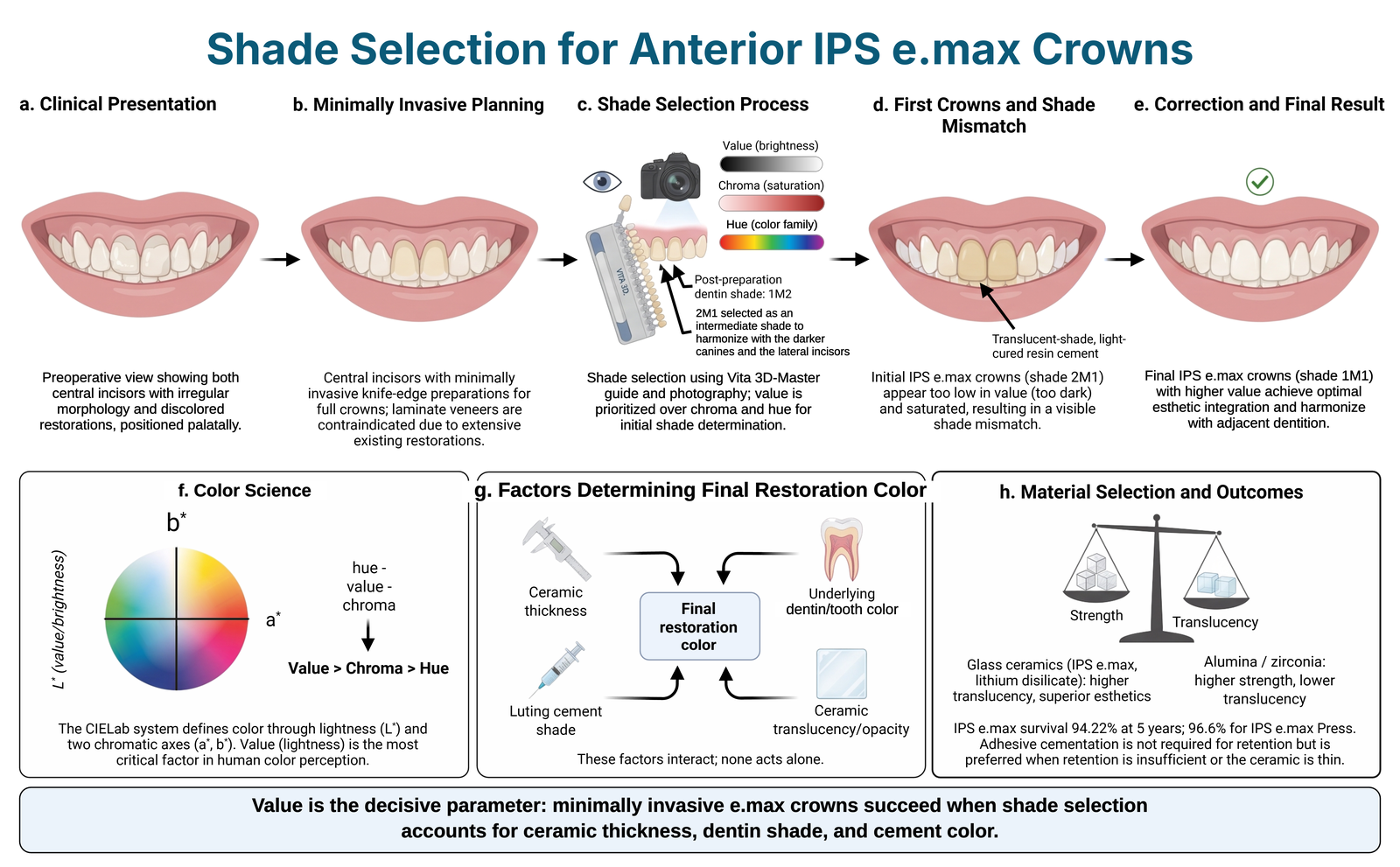
  • Graphical abstract: Shade selection for anterior IPS e.max crowns

    Shade selection for IPS e.max lithium disilicate crowns on maxillary central incisors: A case report and literature review

    Shade selection is a critical step in the esthetic rehabilitation of anterior teeth, because the final appearance of an all-ceramic restoration depends on the selected shade, the ceramic material and its thickness, the color of the underlying tooth structure, and the luting cement. This case report and literature review describes the restoration of both maxillary central incisors with IPS e.max lithium disilicate crowns. A 32-year-old woman with a history of dental trauma and repeated composite restorations was dissatisfied with the appearance of her maxillary central incisors, which were lingually inclined, contained extensive composite resin restorations, and showed morphological irregularities. A conservative plan limited to these two teeth was adopted, and IPS e.max crowns were preferred over laminate veneers because of the volume of the existing restorations. After minimal buccal reduction with a knife-edge finish line, shade was selected with the Vita 3D-Master guide and clinical photographs, and the prepared dentin shade (1M2) was also recorded. The first crowns, fabricated in shade 2M1 and cemented with a translucent light-cured resin cement, appeared darker than the neighboring teeth. One week later, they were replaced with higher-value 1M1 crowns, which were cemented with a bleach-shade cement using the same bonding protocol. At the 6-month follow-up, the restorations blended with the neighboring dentition in color, form, and surface texture. The reviewed literature indicates that visual shade selection is subjective and is best combined with instrumental methods; that value is the most important dimension of color perception; and that ceramic thickness, substrate color, and cement shade can cause perceptible color differences in glass-ceramic restorations. Within the limitations of a single case, natural esthetic results can be achieved even when only two anterior teeth are restored, provided that visual and digital methods are combined, the color–material–cement interaction is managed, and clinician and technician communicate closely.
    Ceramics, color perception, crowns, dental esthetics, prosthesis coloring, resin cements
    Ekin Gökmen Akmansu, Nihal Özcan
    03.11.2026
    e260671
    Abstract Views: 124 Download: 118 DOI 10.5577/intdentres.671
  • Contemporary management and complex dental treatments of a patient with Sjögren’s disease: A 10-year follow-up

    Sjögren’s Disease (SD) is a chronic systemic autoimmune disease characterized by lymphocytic infiltration of the exocrine glands, primarily affecting the lacrimal and salivary glands. The etiology and pathophysiology of the disease remain unclear. Fatigue and weakness are among the most common systemic symptoms, alongside ocular and oral dryness. Reduced salivary flow leads to dry mouth and lips, erythema of the oral mucosa and tongue, burning sensations in the tongue, atrophy of the filiform papillae, fissured tongue, and loss of taste. Patients with SD often experience a higher prevalence of dental caries and early tooth loss, which significantly impairs their oral health-related quality of life. This case report presents the comprehensive dental management of a 32-year-old female patient with a history of chronic SD over a 10-year follow-up period. The patient was referred to our clinic with multiple dental complaints. Clinical and radiographic examinations revealed extensive carious lesions, periapical pathoses, periodontal problems, pronounced tooth sensitivity, and hyposalivation. For treatment, a combination of surgical (e.g., apical resection) and nonsurgical procedures, including coronal restorations, endodontic therapies, and prosthodontic rehabilitations, was performed. During the 10-year follow-up, the treated teeth remained asymptomatic, and radiographic evaluations showed complete healing of the lesions, with no need for additional surgical intervention.
    Sjögren’s disease, caries, endodontics, prosthodontics, surgery, healing
    Kürşat Er, Hatice Harorlı, Mehmet Ali Altay, Ulviye Şebnem Büyükkaplan
    31.12.2025
    237-240
    Abstract Views: 941 Download: 276 DOI 10.5577/intdentres.623
  • Clinical Parameters and CRP Levels in Generalized Aggressive Periodontitis Patient: A Case Report

    Aim: Generalized aggressive periodontitis (G-AgP) is the most severe and destructive form of periodontitis.It usually starts under the age of 30 and it is difficult to recover tissue health with sole periodontal treatment. In this case was to evaluate effect of full-mouth ozone treatment on clinical parameters and blood CRP levels in a G-AgP patient. Methodology: A 23 year-old male patient was diagnosed as G-AgP.Clinical attachment levels (CAL), plaque index (PI), gingival index (GI), bleeding on probing (BoP) and blood C-reactive protein (CRP) levels were recorded.Full mouth scaling and root planning and ozone application were performed. Results: Baseline mean full-mouth PI,GI scores and CAL were 3,2 and 5.2mm respectively. 42% of sites showed a CAL of 4-6mm and 26% showed ≥7mm. 72% of the sites exhibited BOP.15 teeth had CAL ≥6mm. After treatments, PI and GI scores were both 1.0.  19% of sites had 4-6mm and 16% of sites were ≥7mm CAL; 12% exhibited BOP. Six teeth had CAL ≥6mm.Baseline CRP was 9 mg/dL and increased to 34 during treatments and decreased to 2 mg/dL after 4 weeks. Conclusion: Within limitations of this case report, it could be suggested that monitoring CRP and subgingival ozone application might be beneficial in treating GAgP.    How to cite this article:  Balcı Yüce H, Uçan Yarkaç F, Tulu F. Clinical Parameters and CRP Levels in Generalized Aggressive Periodontitis Patient: Case Report. Int Dent Res 2018;8(1):39-44.   Linguistic Revision:  The English in this manuscript has been checked by at least two professional editors, both native speakers of English.
    Aggressive periodontitis, ozone therapy, C- reactive protein
    Hatice Balcı Yüce, Fatma Uçan Yarkaç, Feyza Tulu
    30.04.2018
    39-44
    Abstract Views: 1457 Download: 707 DOI 10.5577/intdentres.2018.vol8.no1.7
1 - 14 of 14 items

Journal Issue

Vol. 16 (2026): International Dental Research
Vol. 16 (2026) Continuous Publication
View Current Issue

Published Volumes

2026
  • Vol. 16 (2026): International Dental Research
  • Vol. 16 No. S1 (2026): International Dental Research
  • Vol. 16 No. Advanced Online (2026): International Dental Research
2025
  • Vol. 15 No. 3 (2025): International Dental Research
  • Vol. 15 No. 2 (2025): International Dental Research
  • Vol. 15 No. 1 (2025): International Dental Research
2024
  • Vol. 14 No. 3 (2024): International Dental Research
  • Vol. 14 No. Suppl. 1 (2024): International Dental Research
  • Vol. 14 No. 2 (2024): International Dental Research
  • Vol. 14 No. 1 (2024): International Dental Research
  • 2024: Advanced Online
2023
  • Vol. 13 No. S1 (2023): International Dental Research
  • Vol. 13 No. 3 (2023): International Dental Research
  • Vol. 13 No. 2 (2023): International Dental Research
  • Vol. 13 No. 1 (2023): International Dental Research
2022
  • Vol. 12 No. Suppl. 1 (2022): International Dental Research
  • Vol. 12 No. 3 (2022): International Dental Research
  • Vol. 12 No. 2 (2022): International Dental Research
  • Vol. 12 No. 1 (2022): International Dental Research
  • No. Accepted Articles: International Dental Research
Show more Show less
2021
  • Vol. 11 No. 3 (2021): International Dental Research
  • Vol. 11 No. Suppl. 1 (2021): International Dental Research
  • Vol. 11 No. 2 (2021): International Dental Research
  • Vol. 11 No. 1 (2021): International Dental Research
2020
  • Vol. 10 No. 3 (2020): International Dental Research
  • Vol. 10 No. 2 (2020): International Dental Research
  • Vol. 10 No. 1 (2020): International Dental Research
2019
  • Vol. 9 No. 3 (2019): International Dental Research
  • Vol. 9 No. 2 (2019): International Dental Research
  • Vol. 9 No. 1 (2019): International Dental Research
2018
  • Vol. 8 No. 3 (2018): International Dental Research
  • Vol. 8 No. 2 (2018): International Dental Research
  • Vol. 8 No. 1 (2018): International Dental Research
2017
  • Vol. 7 No. 3 (2017): International Dental Research
  • Vol. 7 No. 2 (2017): International Dental Research
  • Vol. 7 No. 1 (2017): International Dental Research
2016
  • Vol. 6 No. 1 (2016): Volume 6, No 1, 2016
2012
  • Vol. 2 No. 3 (2012): Volume 2, No 3, 2012
  • Vol. 2 No. 1 (2012): Volume 2, No 1, 2012
  • Vol. 2 No. 2 (2012): Volume 2, No 2, 2012
2011
  • Vol. 1 No. 3 (2011): Volume 1, No 3, 2011
  • Vol. 1 No. 2 (2011): Volume 1, No 2, 2011
  • Vol. 1 No. 1 (2011): Volume 1, No 1, 2011

socialshare

Submit Your Paper
Become a Reviewer

sidebarmenu

Journal Menu

 Home

 Aims & scopes

 Editorial Board

 Author Guidelines

 Abstracting & Indexing

 Peer Review Process

 Ethics Statement

 Plagiarism Policy

 Digital Archiving Policy

 Corrections and Retractions

 Journal History

 Journal Statistics

 Society Information

 Congresses & Events

 Language Editing

 Contact

idr


Citations
Updated daily Google Scholar
All Since 2021
Citations 1073 873
h-index 13 11
i10-index 18 12
0 50 100 150 200 250
  • 37 2019
  • 50 2020
  • 71 2021
  • 112 2022
  • 146 2023
  • 140 2024
  • 202 2025
  • 199 2026
Citations per year
Year Citations
2019 37
2020 50
2021 71
2022 112
2023 146
2024 140
2025 202
2026 (to date) 199

2026 counts citations recorded so far this year.

icmje and ithenticate

Indexed in CiteLink

EBSCO

TR Dizin Journal List

Keywords

Information

  • For Readers
  • For Authors
  • For Librarians

Latest publications

  • Atom logo
  • RSS2 logo
  • RSS1 logo
Most Read Articles
  • Endodontic Irrigation Solutions: A Review
    13336 13336 views 2017
  • Mechanical properties of resin composites containing bioactive glass and experimental nano zinc-silica complex
    11127 11127 views 2021
  • Areas for use of PEEK material in dentistry
    9560 9560 views 2018
  • Comparative evaluation of the responses from ChatGPT-5, Gemini 2.5 Flash, and DeepSeek-V3.1 chatbots to patient inquiries about endodontic treatment in terms of accuracy, understandability, and readability
    7864 7864 views 2025
  • Evaluation of the color stability and surface roughness of dual-cure, bulk-fill composites
    7181 7181 views 2021

announcement

Announcement

visitors

Visitors 

Flag Counter

Web Analytics

View My Stats

Most Cited Articles
  • Areas for use of PEEK material in dentistry
    162 162 citations 2018
  • Contemporary Permanent Luting Agents Used in Dentistry: A Literature Review
    61 61 citations 2011
  • The Latest Developments Related to Composite Resins
    44 44 citations 2017
  • PEEK in dentistry, properties and application areas
    37 37 citations 2020
  • A Literature Review of Self Adjusting File
    31 31 citations 2011

Browse

  • Categories
    • Open Access
    • Original Article
    • Review
    • Case Report
    • Letter to Editor
logo
E-ISSN: 2146-1767

Download App

Contact

Publisher: International Dental Research

Email: info@dental-research.com

Website: www.dental-research.com

Address: Publisher ZEUS PUBLISHING www.zeuspublishing.com

Social Media

ElsevierCiteLinkEBSCOOpen AccessCrossrefGoogle ScholarCOPECreative Commons

Copyright © 2011-2026 | International Dental Research. All rights reserved.
CC BY Open Access articles are distributed under the terms of the Creative Commons Attribution 4.0 International License,
which permits unrestricted use, distribution, and reproduction provided the original work is properly cited.

Privacy notice

This journal stores a session cookie that is required for the site to work, and keeps usage statistics that do not identify you.

More information