
3D micro-CT analysis of void formation of glass fiber posts bonded using different resin cements
DOI:
https://doi.org/10.5577/intdentres.766Keywords:
Fiber post, resin cement, micro-CT, void formation, luting agentAbstract
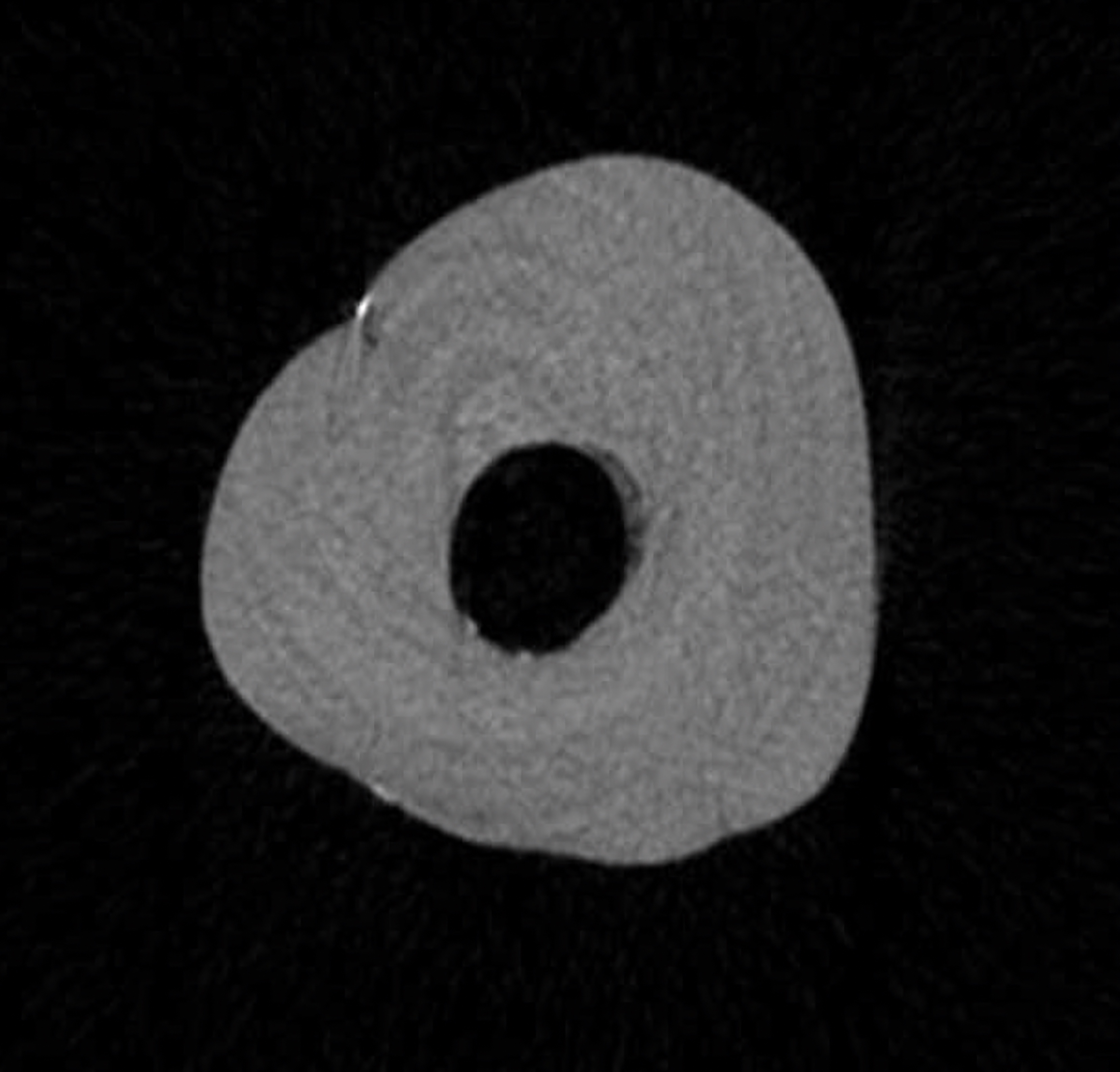
Aim: The aim of this in vitro study was to evaluate and compare the void volumes at the dentin–post interface when glass fiber posts were bonded using different resin cements, as assessed by 3D micro-computed tomography (µCT).
Methodology: For this investigation, thirty extracted human maxillary central incisors with a single root were chosen. The specimens were divided into three groups at random (n = 10) and restored with glass fiber posts that were cemented using Variolink N, Panavia F 2.0, and RelyX Unicem resin cements, respectively. A resolution of 13.7 µm was used for high-resolution µCT scanning to obtain detailed images of the specimens. The Kruskal–Wallis test (post hoc: Mann–Whitney U with Bonferroni correction), the Friedman test, and the Spearman rank correlation test (α = 0.05) were used for statistical evaluation.
Results: µCT analysis revealed that the mean total void volume at the dentin–post interface was 1.67 ± 0.69 mm³ for the Variolink N group, 2.59 ± 1.75 mm³ for the Panavia F 2.0 group, and 3.28 ± 2.13 mm³ for the RelyX Unicem group. The differences between the groups were statistically significant (p < 0.05), with the lowest void volume in the Variolink N group and the highest in the RelyX Unicem group. Within each group, void formation was distributed homogeneously across root levels (p > 0.05), whereas specimens cemented with RelyX Unicem showed significantly higher void formation in the apical third than the other two cements (p < 0.05). No correlation was found between empty canal volume or empty canal surface area and void volume (p = 0.34 and p = 0.19, respectively).
Conclusion: Post-cementation analysis revealed significant differences in total void volume among the resin cements, whereas within-group regional comparisons did not yield statistically significant differences. Decementation of fiber posts is frequently associated with voids within the luting cement layer, so the choice of resin cement and its delivery technique remains clinically relevant.
Downloads
Downloads
Published
Issue
Section
Categories
License
Copyright (c) 2026 The Author(s)

This work is licensed under a Creative Commons Attribution 4.0 International License.

This is an Open Access article distributed under the terms of the Creative Commons Attribution 4.0 International License (CC BY 4.0), which permits unrestricted use, distribution, and reproduction in any medium, provided the original work is properly cited.
































 Open Access articles are distributed under the terms of the